Créer jeu
Télécharger
Obtenir Plan Académique
Partager le jeu
Mots Roulette
Mots Roulette

Interlanguage

Intégrez-le à votre plateforme

Vous pouvez intégrer le jeu dans un LMS compatible avec LTI 1.1 ou LTI 1.3 comme Canvas, Moodle ou Blackboard. Les scores seront ainsi automatiquement enregistrés dans le carnet de notes de la plateforme.
Télécharger
Vous avez dépassé le nombre maximum de jeux que vous pouvez intégrer à Google Classroom avec votre Plan actuel.

Pour intégrer autant de jeux que vous le souhaitez dans Google Classroom, vous avez besoin d’un Plan Académique ou un Plan Commerciel.

Vous avez dépassé le nombre maximum de jeux que vous pouvez intégrer à Microsoft Teams avec votre Plan actuel.

Pour intégrer autant de jeux que vous le souhaitez dans Microsoft Teams, vous avez besoin d’un Plan Académique ou un Plan Commerciel.

Le téléchargement du jeu est une fonctionnalité exclusive pour les utilisateurs avec un Plan Académique ou un Plan Commercial.

Obtenez votre Plan Académique ou Plan Commercial dès maintenant et commencez à intégrer vos jeux dans votre LMS, votre site Web ou votre blog.

Si vous le souhaitez, vous pouvez télécharger une jeu de test ici et tester son intégration:

Interlanguage

Mots Roulette

Parties jouées 2 %Précision 46 Temps moyen 13:56

À propos de cette activité

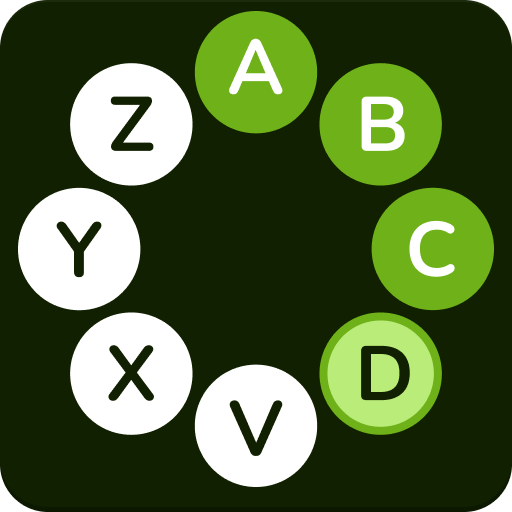
Complete the alphabet wheel by writing the correct word or phrase for each letter.

Créé par

Argentina

Téléchargez la version pour jouer sur papier

Créez votre propre jeu gratuite à partir de notre créateur de jeu
Affrontez vos amis pour voir qui obtient le meilleur score dans ce jeu

Top Jeux

%
Anonyme
Anonyme
%
%
%
Vous avez dépassé le nombre maximum de jeux que vous pouvez imprimer avec votre Plan actuel.

Pour imprimer autant de jeux que vous le souhaitez, vous avez besoin d’un Plan Académique ou un Plan Commerciel.

Imprimez votre jeu
Interlanguage
 

InterlanguageVersion en ligne

Complete the alphabet wheel by writing the correct word or phrase for each letter.

par Ingrid Kreitzer
A
B
C
D
E
F
G
H
I
K
L
M
N
O
P
Q
R
S
T
U
V
X
Y
Z

Contains A

A device proposed by mentalist theory that helps humans learn language.

Starts with B

Psychological theory that explains learning through habits and stimulus-response connections.

Starts with C

The idea that the mind works similarly to a computer in processing language.

Contains D

The reappearance of errors that a learner previously seemed to have corrected (typical of fossilized learners).

Starts with E

Learners produce these while developing their interlanguage.

Starts with F

The human mind is equipped with a ________ for learning language.

Contains G

According to mentalism, input serves mainly to do this to the language acquisition device.

Starts with H

According to mentalist theory, only these beings can learn language.

Starts with I

L2 learners linguistic system construction that draws, in part, on the learner’s L1 but is also different from it and also from the target language.

Starts with K

L2 information stored in long-term memory.

Contains L

A model suggesting that children learn language through repeated exposure to words, whether those words are directed at them or simply overheard.

Starts with M

The learner constructs a system of abstract linguistic rules which underlies comprehension and production of the L2. This system of rules is viewed as a:

Starts with N

A style of online language that may influence interlanguage development.

Starts with O

L2 knowledge is used by the learner to produce spoken and written:

Starts with P

A characteristic of interlanguage meaning it is open to influence.

Contains Q

A learner's interlanguage is described as this kind of linguistic system.

Starts with R

In behaviorism, habits are strengthened through this process.

Contains S

The systematic nature of learner’s errors demonstrates that they are actively involved in constructing their own:

Contains T

Theory of L1 acquisition that emerged in the 60s and 70s.

Contains U

Learners change their grammar from one time to another by adding rules, deleting rules, and restructuring the whole system. This results in an:

Starts with V

The existence of competing rules in learner language.

Contains X

The processes responsible for creating intake and L2 knowledge occur within this of the learner’s mind (where the learner’s interlanguage is constructed).

Contains Y

American linguist that coined the term “interlanguage”.

Contains Z

A characteristic of interlanguage in which incorrect forms become permanent.

Voulez-vous vraiment quitter la page ?

En quittant la page, vous perdrez la progression du jeu.