Créer jeu
Télécharger
Obtenir Plan Académique
Partager le jeu
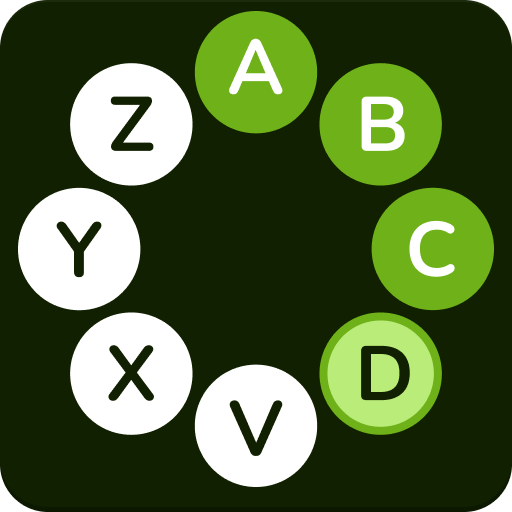
Mots Roulette
Mots Roulette

NLP & AI Alphabet Quiz

Intégrez-le à votre plateforme

Vous pouvez intégrer le jeu dans un LMS compatible avec LTI 1.1 ou LTI 1.3 comme Canvas, Moodle ou Blackboard. Les scores seront ainsi automatiquement enregistrés dans le carnet de notes de la plateforme.
Télécharger
Vous avez dépassé le nombre maximum de jeux que vous pouvez intégrer à Google Classroom avec votre Plan actuel.

Pour intégrer autant de jeux que vous le souhaitez dans Google Classroom, vous avez besoin d’un Plan Académique ou un Plan Commerciel.

Vous avez dépassé le nombre maximum de jeux que vous pouvez intégrer à Microsoft Teams avec votre Plan actuel.

Pour intégrer autant de jeux que vous le souhaitez dans Microsoft Teams, vous avez besoin d’un Plan Académique ou un Plan Commerciel.

Le téléchargement du jeu est une fonctionnalité exclusive pour les utilisateurs avec un Plan Académique ou un Plan Commercial.

Obtenez votre Plan Académique ou Plan Commercial dès maintenant et commencez à intégrer vos jeux dans votre LMS, votre site Web ou votre blog.

Si vous le souhaitez, vous pouvez télécharger une jeu de test ici et tester son intégration:

NLP & AI Alphabet Quiz

Mots Roulette

Parties jouées 0

À propos de cette activité

Guess one AI/ML term for each letter.

Créé par

Egypt

Téléchargez la version pour jouer sur papier

Créez votre propre jeu gratuite à partir de notre créateur de jeu
Affrontez vos amis pour voir qui obtient le meilleur score dans ce jeu

Top Jeux

%
Anonyme
Anonyme
%
%
%
Vous avez dépassé le nombre maximum de jeux que vous pouvez imprimer avec votre Plan actuel.

Pour imprimer autant de jeux que vous le souhaitez, vous avez besoin d’un Plan Académique ou un Plan Commerciel.

Imprimez votre jeu
NLP & AI Alphabet Quiz
 

NLP & AI Alphabet QuizVersion en ligne

Guess one AI/ML term for each letter.

par Yusra Mukhtar
A
B
C
D
E
F
G
H
I
J
K
L
M
N
O
P
Q
R
S
T
U
V
W
X
Y
Z

Starts with A

Step-by-step procedure used to solve problems by machines.

Starts with B

Number system using two symbols, 0 and 1, fundamental in computing.

Starts with C

Neural network that uses convolutional layers to process grid-like data such as images.

Starts with D

Multi-layer neural networks used to learn representations from complex data.

Starts with E

Part of a model that converts input data into a compact internal representation.

Starts with F

Adjusting a pretrained model on task-specific data.

Starts with G

Models that create new data such as text or images based on learned patterns.

Starts with H

Intermediate layer in neural networks between input and output.

Starts with I

Process of applying a trained model to new data to produce predictions.

Starts with J

Lightweight data-interchange format used to store and transmit information.

Starts with K

Instance-based learning method using proximity in feature space.

Starts with L

A model trained on vast text corpora to generate and understand human language.

Starts with M

Field enabling computers to improve from data without being explicitly programmed.

Starts with N

Computational model inspired by brain structure, with interconnected units called neurons.

Starts with O

Model learns noise from training data, reducing performance on new data.

Starts with P

Initial training on broad data sources before fine-tuning.

Starts with Q

Term entered into a search or prompt to retrieve information.

Starts with R

Neural network that processes sequences by passing hidden state through time.

Starts with S

Learning from labeled examples to map inputs to correct outputs.

Starts with T

Attention-based architecture enabling parallel processing of sequence data.

Starts with U

Learning from unlabeled data to discover structure without explicit targets.

Starts with V

Numeric representation of a word or sentence in continuous space.

Starts with W

Dense vector representation of a word capturing semantic similarity.

Starts with X

Gradient-boosted trees algorithm used for structured data tasks.

Starts with Y

Human-readable data-serialization language often used for configurations.

Starts with Z

Ability of a model to perform tasks without task-specific examples during training.

Voulez-vous vraiment quitter la page ?

En quittant la page, vous perdrez la progression du jeu.